

Welcome to Asset Allocation for Beginners!
Let’s see if this sounds familiar:
You’re on your financial journey because you feel that it is important to secure a solid financial foundation for a better future for yourself. You’ve opened a Roth IRA, 401k with match from your employer, maybe a Health Savings Account, or even a Taxable Brokerage account. Now you want to invest your money for long term growth. You have an amount you are comfortable transferring into one of these accounts to get started or maybe you’ve already deposited it into the account chosen.
Fantastic!
But you’re probably asking yourself:
But wait, what now?
Next is the step most people forget to do: you have to put your money into an investment which can make money over time based on where you choose to put it.
Let’s talk about Asset Allocation!
What is Asset Allocation?
Asset allocation is the choice of investment into different asset classes to balance risk versus rewards of investment.
That’s a lot of words, let’s define them so we are all on the same page
- Asset – anything that is owned and has value – a home, a bank account, an investment, a stock, a CD, a bond.
- Asset Class – A form of something of value e.g. Stocks, Bonds, Cash, Mutual Funds, ETFs, etc.
- Risk – Any amount of uncertainty for growth or potential for financial losses
Long story short, a sound investment strategy mitigates loss to increase potential of gain. The point of asset allocation is to choose the assets which follow your financial goals, follow your specific time horizon, and trend your personal risk tolerance.
We will talk about those concepts now.
Financial Goals
There are two important things to consider for financial goal planning –
An individual’s Time Horizon versus their Risk Tolerance.
A Time Horizon is a formal way to say “How long are you looking to have these investments sit before they become a necessary part of your financial plan or goal and it can be separated into three categories.
Short Term – Months to about three to five years time
Medium Term – three to five years to 10 years
Long Term – Greater than 10 years time
Time horizon can dictate the types of investments, the risk someone may expose themselves to, and the potential for higher or lower gains depending on that risk.
Risk Tolerance is more dynamic. This is an individual’s psychological and physical response to risk. It is a willingness or the ability to accept the uncertainty or loss in exchange for the potential to gain on an investment.
Are you able to watch an investment lose money (sometimes multiple thousands of dollars) for a day, leave it, only to earn beyond the original value of the losses the next day? This is risk tolerance
Think of it like this for a more concrete example. If you were getting ready to retire, would you be more or less likely to want to watch your assets lose value? It depends on the person.
A general trend is to reduce risk exposure as time horizon shortens but this can vary depending on an individual’s tolerance for risk.
Identify your personal Time Horizon
This isn’t too complicated but worth mentioning.
Consider your personal Risk Tolerance
Investing with a Strategy
Sound investment starts with a good strategy
So, you have your account started, your funds are available, you’ve thought about your risk tolerance and time horizon, and you are ready to start to invest because you have pieces of the puzzle figured out.
But wait, the whole reason you came here was probably to figure out how to actually invest in something, right? Or how to pick the “right” investment for you.
The truth is, no one can decide this for you and it is a choice you must make. The purpose of identifying your risk tolerance and time horizon is to give you a solid foundation to start thinking from.
On the bright side, now we can discuss how to invest
Ticker Symbol
At the absolute basis of any investment is identification. A ticker symbol is a one to five letter representation of an asset on an exchange. It can represent a specific company, or a fund, or other securities which can be invested into.
Common examples include:
AAPL – Apple Inc.
AMZN – Amazon Inc.
BAC – Bank of America
T – AT&T
FXAIX – Fidelity 500 Index Fund
VOO – Vanguard S&P 500 ETF
SCHD – Schwab US Dividend Equity ETF
And so on. These ticker symbols are the identifier used to locate the asset you want to invest in. These ticker symbols are the nametags for investment vehicles. If there are particular ones you begin to like over time, you can easily find them using their ticker symbols and even trend their performance over time. Many investment accounts have data and graph functionality you can use to “watchlist” a particular set of investment tickers to keep an eye on them over time.
Each purchase costs money
This may sound obvious, but bear with me.
Depending on the company you chose to have your investment account with, different investments may cost different amounts of money to purchase. The cost of a “unit” of the asset may be the same (e.g. 1 share of a stock may be the same price at all exchanges at any given minute) but the cost to purchase that individual stock may be more or less depending on the company you are investing with (e.g. Fidelity may charge no fees for their 500 Index fund, but Vanguard would charge a fee for this purchase).
In addition, each purchase has an expense ratio. An expense ratio tells you the cost of owning the fund per year. These expense ratios are subject to change at any time. These expense ratios only apply to professional managed funds like Mtual Funds or ETFs
As an example, say VTI – Vanguard’s total stock market ETF – has an expense ratio of 0.03% as of April 4th, 2025. Per year, you will be charged 0.03% of the invested funds for it to be managed.
As a calculation example, say we have $100,000 in the account invested only into Vanguard’s Total Stock Market ETF with the expense ratio of 0.03%
0.03% of 100,000 is $30 charged per year for fund management. Overall, not too bad especially for a set it and forget it long term investor just learning how to invest.
But imagine hundreds of thousands of people investing into this fund.
Now you can see one way investment companies make money 🙂
It is the job of the asset owner, the person who is buying into the fund, to decide if retaining investments is beneficial to them or not depending on their personal time horizon, their personal risk tolerance, the asset itself, and the asset expense ratio.
Tax Implications
Depending on the type of account you are investing in, remember that selling investments can trigger a taxable event.
401k – All growth on your investments is tax deferred to the time of withdrawal from the 401k. You can buy and sell investments in this account without triggering taxable events. Appropriate withdrawals after retirement age are treated as taxable income.
Roth IRA – Contributions are required to come from earned income which is already taxed. Investments can be purchased and sold at will. Withdrawals after retirement age are tax free.
Taxable Brokerage – Taxed. Capital gains rate tax applies and holding investments longer than a year can trigger reduced tax implications through lower long-term capital gains tax rate instead of short term which is taxed at the ordinary income tax rate.
Now that we’ve covered a lot of information about identifying investment choices for ourselves, and the potential benefits and drawbacks of investments and the accounts we invest from, lets cover some different example investment types.
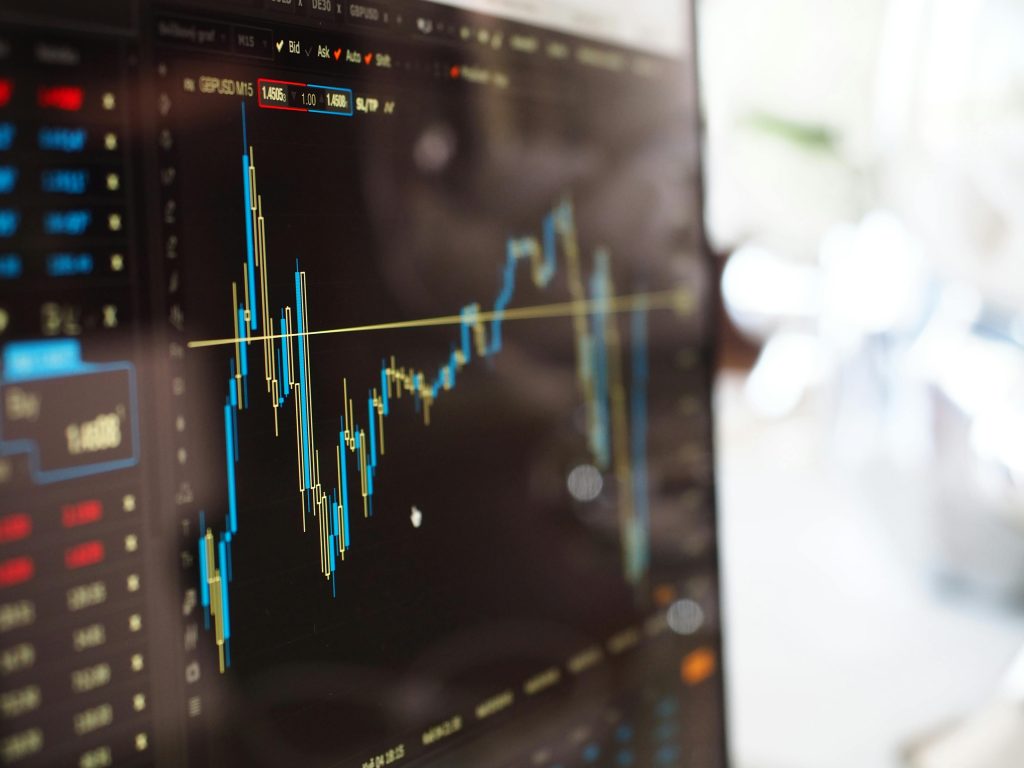
Example Investment types
Mutual Funds
These are professionally managed programs funded by shareholders in diverse holdings.
Essentially means people invest (shareholders) into funds which have many different assets included in them (diverse holdings) which are arranged and organized by someone else (professionally managed). Remember, any management means fees, but not all funds are built the same.
Index Funds
These are a very common type of long term investment vehicle. If you’ve ever heard of an “S&P500 Index Fund” that fits under this classification. These funds are sold once per day at the close of the market.
An Index Mutual Fund trends a benchmark – such as the S&P500 – to keep fund management expenses low but to also minimize long term risk and losses. For the example of the S&P500, the top 500 leading U.S. companies are trended in the fund to minimize any one company’s poor performance while capitalizing on the growth of the other 499.
This is a fund, it will have an expense ratio. These tend to have low fees because the top 500 companies do not change very frequently and the management of the fund is less involved.
The average growth of the S&P500 – as in, the growth of the S&P500 over a long period of time – is 6-8%. You may lose or gain on any particular year, but over a long time horizon, investments gain 6-8% value per year based on historical data.
*S&P Global* https://www.spglobal.com/en is a company which provides financial intelligence data and the S&P 500 is a product of S&P Down Jones Indices which are a part of S&P Global. Good place to look at graphs and data if you’re a huge data table nerd like me 🙂
As always – vet your sources and double check everything!
Large Cap
Stands for “Large Capitalization”. Capitalization is the ability for a company to convert income or assets into capital.
This is a fund, it will have an expense ratio.
Large Cap funds trend the big companies of the industry which are slower moving, more reliable, and possibly generally less risky. These types of funds do tend to overlap with many similarities to bigger index funds simply because the companies that are doing well are generally the bigger companies with more capital and income. This makes larger companies a bit more reliable when it comes to risk management and shorter time horizons.
However, the offset of reliability of growth also means they are less likely to have big gains. You will not see large companies spike up in value by multiple tens of percents, more likely to be in the 1-5% gain or loss range on average.
Small Cap
Stands for “Small Capitalization”. As stated before – Capitalization is the ability for a company to convert income or assets into capital.
This is a fund, it will have an expense ratio.
These are the up and coming companies. You would not find a brand new company on a big exchange without some history (earlier than this is talking penny stocks, series funding, and even earlier than that is seed funding, which are very early and very risky investments)
Small Cap investments tend to be on average riskier, but with the potential for larger gains. An intelligent asset allocation would make room for the ability of the growth these assets provide, but would also be intelligent to mitigate risk by utilizing other funds to cover when losses are realized.
Individual Stocks
This is also the most familiar type of investing to most individuals. When people hear “stock market” they often think “individual company stocks”. This category is exactly that.
This is not a fund, it is an individual asset class, it will not have an expense ratio.
However, it will often have fees associated with the purchase or selling of stock. Usually a flat fee regardless of the quantity purchased or sold.
Bonds
Bonds are a a purchased product that an investor uses to secure interest payments over a long period of time. Essentially, the investor is loaning money to the company the bond is purchased from.
These bonds have set interest rates and set prices. So if you purchase a 10 year, $5,000 bond at a 2% interest rate, in ten years time you will have:
$5,000
and
$100 x 10 or $1,000 dollars in interest
for a total of $6,000 dollars.
Bondholders are the first individuals to be paid if a company goes bankrupt. It is a collection of an official loan from a company. This formal promise is lawful and must be honored. In this way, bonds are a less risky form of investment and tend to be more prevalent in older individuals profiles or those who are comfortable with significantly less risk.
Exchange Traded Funds (ETFs)
Very similar to Mutual Funds, however these are sold throughout the day – meaning they trade more like a stock than a fund. This means that the ETF price can fluctuate during the day exactly like stocks, and not just after the market closes.
This is a fund, it will have an expense ratio. This also trades like an individual stock and can have trading fees associated with them.
These funds are often used to reduce capital gains taxes as they tend to have lower turnover than stocks (e.g. individuals don’t sell as frequently or they tend to “buy and hold” these assets). This is often due to the fees associated with purchasing them, though conversely the minimum initial investment is often lower than a Mutual Fund or Individual Stock.
Dividend Payers
This is an entirely separate income stream from growth of an investment.
A dividend is a distribution of the earnings of a company, related to how many shares a shareholder has in the company, often paid quarterly (once every three months).
Dividends are often paid by companies that do not need to utilize earnings for growth of the company and instead pays the individuals invested into shares the dividend to incentivize them to remain invested in their company. To be very clear:
An asset can both grow or depreciate in value while also paying a dividend or not.
Stock, mutual funds, and ETFs can all pay dividends on top of their growth or losses. The fund gives ex-dates which are the date you must own the shares in the fund in order to be considered for a dividend payout.
A dividend is paid by a price per share. The price per share can vary wildly.
As a calculation example:
Just to give a value to it and pick a fund at random – an example fund is the Schwab US Dividend Equity ETF which pays dividends.
Each share currently costs: $27.51
The last dividend fund ex date was June 25th, 2025
The last dividend yield was 3.78%.
Or
$0.2602 paid per share.
If someone invested $100,000 in the fund at $27.51 per share, they would own 3635 full shares with some small dollar amount remaining.
3635 shares * $0.2602 per share = $945.83 paid per quarter or $3783.31 paid per year.
Dividend payments, sorted by Ex-date, will be available historically for any fund or stock paying dividends.
However, important to remember: Dividends are paid when a company is performing well as they are directly related to the earnings of the company often per quarter – this is a form of distribution that will be reduced quickly should the company perform poorly at any time.
These investments tend to be best utilized when a portfolio is already large enough to realize dividends from the amount of funds in the portfolio – which tends to be later on in an investment journey, but this can be a choice for the owner of the shares – meaning you!

Congratulations!
You’ve made your first steps to better personal judgement with regards to asset allocation on your own investments! These are not even close to all of the different types of asset classes and hopefully this inspires you to do some more reading!
(These book suggestions are not sponsored, they are just a good read for asset allocation.
A book I recommend is called “All About Asset Allocation” by Richard Ferri.
The book has solid figures and data all the way back from the inception of the stock market and even gives some basic sample asset allocations for individuals looking for concrete examples!
Another read I recommend is “A Random Walk Down Wall Street” by Burton Malkiel.
This gives a different insight into the way assets are more randomly valued (less on historical data) and to favor a passive approach to investing rather than active stock trading.
Lastly, the most important part of asset allocation is to remember
Investment is a personal choice that depends on
An Individual’s:
Time Horizon
Risk Tolerance
Asset choices
And the Asset’s:
Company Affiliation
Expense ratios (if managed funds)
Historical growth (if relevant)
Dividend payments (if relevant)
From my mind to yours!
~Jay
I enjoy sharing what I have learned through my own personal finance journey!
Broken down, defined and easily understandable